

Originally written for Strove: Resilience In The Workplace
Ready, set goal!
I’m sure you have all heard of setting SMART goals (specific, measurable, attainable, realistic and time-oriented) but knowing this still doesn’t help with the motivation and behavioural side of things. There is deeper physiology & psychology separating the people who find the self-discipline and self-motivation to keep going and those who cannot.
Human beings are complex and the result we might want to achieve is just the tip of the iceberg. The goal is what we want to see but there are many layers under the surface that contribute to us achieving a goal (whatever that may be).
The Integrated Performance Model gives us a visual representation of our various layers.
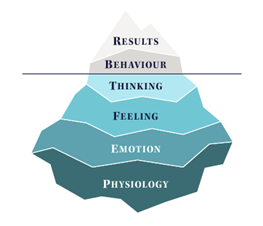
If you want to achieve a goal, you need to have an awareness of your basic physiology to create a deeper understanding and find out your ‘why’ for wanting to see your desired result. It would be nice to make a wish and have things magically happen, but like most things in life, a bit of work and discipline can go a long way!
With this in mind, the key to setting achievable goals is to tune into your basic body functioning and wake up to your overall emotional state which ultimately feeds up the line and impacts our end result. With more conscious awareness we can begin to tune into our emotional regulation which is a game-changer in helping us shift from a victim of circumstance to taking responsibility for what we want to achieve. The shift also depends on these key things:
- Think big, start small
- Be consistent
- Find support to hold you accountable
Once we begin to remove blame from our situation we can start to engage with our positive emotional state, a state that evokes feelings of passion, enthusiasm and motivation. Developing this emotional flexibility allows us to not get stuck on any particular perspective, person, situation or outcome. This has an overall positive effect on our integrated performance, allowing us to start to not only achieve but also stick to the goals we set ourselves.
Where do we start?
Dr Alan Watkins, a recognised international expert on leadership and human performance, has developed a very simple tool called the “SHIFT Skill” which can be used in any goal-setting situation. This skill taps into our basic physiology and works up the line to shift our end result so we can experience freedom in the way we feel and helps create a shift in our perceptual awareness. Watkins comments that “one of the most vital life skills to develop is the ability to change the way we feel.” Practise this simple skill to help you shift and connect with the ‘why’ behind the result you want to achieve.
Steps include:
S: Stop, pause and take a breath.
H: Heart: shift your attention to your heart, breathe through the centre of your chest, really expanding into the lungs.
I: Induce a positive emotion (look at something beautiful, think of someone who makes you smile).
F: Feel it in your body.
T: Turn your brain back on.
The great thing about this skill is that no one has to know you are doing it. It’s simple and quick to do. But you need to practise.
Watkins profoundly believes we are the architects of our own experience. That is a very empowering thought. Take your control back by simply tuning in to you and your positive emotional state and start to tackle things, one small step at a time.
(If any of this has piqued your curiosity, take a deeper dive into the Integrated Model – https://www.youtube.com/watch?v=q06YIWCR2Js )